A Brief History Of Ogden’s
Few British tobacco companies have such a storied history as Ogden’s of Liverpool. Undoubtedly iconic in its heyday, this brand is still sought after by modern pipe smokers who want to partake in something that has been a staple of the British pipe smoking psyche for generations. It was in 1860 that the original founder, Thomas Ogden first set up his business in Park Lane, Liverpool.
From this store he would sell various tobacco related wears. Fortune favoured Thomas and the premises quickly became a bustling shop that brought in enough revenue to allow him to expand. Within a matter of only a few years he would open up similar stores across the city of Liverpool which in turn generated enough capital for him to set up his own factory in 1870.

This would still only be the beginning as Thomas’ ambition was to acquire more factories within the city. This was a necessity if the company was going to be able to keep up with the high demand for quality pipe tobacco and cigarettes. Liverpool had been known for many years as the tobacco capital of Britain.
This was due to its extensive history as the major port in the UK that saw the import of many exotic goods such as tobacco, tea and coffee.
By the turn of the century the brand had many notable pipe tobaccos in its portfolio such as St.Bruno, Walnut Flake, Redbreast, St. Julian and many more. The majority of these tobaccos have been discontinued for decades, but the beloved Walnut Flake is still in production. To be compliant with new tobacco laws in the UK in 2016 it had its name changed to Original Flake.
Walnut Flake
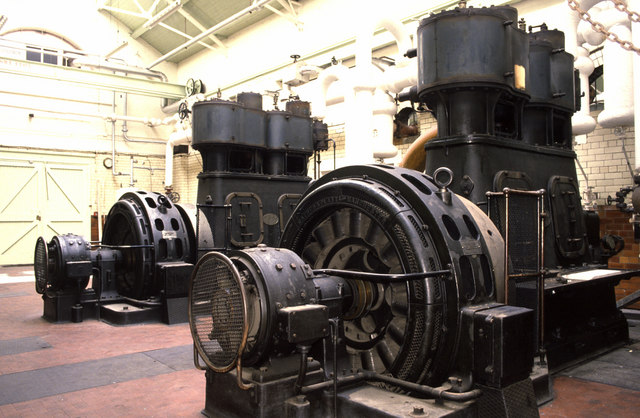
The country’s infatuation with Walnut Flake was almost instantaneous upon its release. Prepared in the traditional flake cut (which has its roots in centuries old maritime tradition) the tobacco is pressed before being sliced into strips. These flakes manage to retain moisture for longer than the same tobaccos prepared in a shag or ribbon format. To achieve this end product the tobaccos are usually steamed and pressed, although with Walnut Flake they opted for a cold press. In 1923 a pair of 430 horsepower inverted vertical compound steam engines were installed to power the machinery in the Ogden’s factory. This would allow them to drastically increase production.
The two main tobacco constituents within Walnut Flake are Burley and Virginia. A modicum of fire cured Kentucky is added to bolster the flavour. These tobaccos are sourced from generational farmers across South America, Africa and East Asia. Contrary to what many people think, Walnut Flake contains no added flavouring.

The sweetness that resonates from it is purely the result of the perfectly blended and pressed tobaccos, which after undergoing these processes are allowed to rest for a few weeks. During this time the different characteristics become married, in other words they unify.
The final stage is the slicing of the flake from one block into many uniform strips, ready for packaging. When interviewed for Voices Of Postwar England a previous employee by the name of Billy stated the following about the slicing process:
“The cakes would be cut up into strips of six on what was called a crosser. Then they would go into the machines and the six strips would be put into the machine and get cut up, I mean there were different cuts, like Bruno was twenty-five cuts to the inch where you got twenty-five flakes to the inch. Walnut, like a walnut slice and Redbreast, they’re all twenty-five.”
Once this stage was finished the resulting slices would be packaged in tins ready for distribution. In the early 1900s until the 1980s most of this tobacco would be sold through small independent tobacconists, much like The Pipe Shop. It wouldn’t be until the 1990s when this tobacco would become what it is today called an OTC (Over The Counter) tobacco in reference to it being sold predominantly in supermarkets and chain newsagents. Despite this fact Walnut Flake consistently remained a favoured choice for the British pipe smoker.
2016 – Rebranding As Original Flake
In 2016 the enforcement of a wave of new regulations would see many well known brands being forced to change their products names in an effort to comply with said new laws. Any tobacco product that had a name relating to edible goods or beverages would have to be changed. For example Walnut Flake would become Original Flake and any tobacco with names such as Whisky would have to opt for a

more ambiguous title such as “Scottish” or “Highland”. Thankfully the iconic blue and red packaging was retained and the same font was in use, this would make it an easier transition for many customers.
Mac Baren
In its current iteration Original Flake is manufactured by Danish manufacturing giant Mac Baren. Whilst under their wing the blend has seen no drastic changes and still retains the Ogdens title on the packaging. Mac Barens had been manufacturing Walnut Flake in Denmark for a number of years before finally acquiring the blend for their portfolio.
Preparation & Flavour Profile
When first opening a packet of Original Flake and inspecting its contents you are greeted by a dark and moist flake that has lighter visible eyes speckled through. It is very reminiscent of an Irish Flake. Most pipe smokers will look to rub down the flake before attempting to smoke it, but others choose to roll it and place it in the bowl of the pipe as is.
When working the flake in between your fingers it falls apart with little resistance. There is a smokey yet naturally sweet aroma that is sent forth from the contents. This is sure to arouse the nose and warm the heart. Placing your rubbed down tobacco in the bowl and lighting it sees at first pleasant treacle like flavour morph into a lightly floral taste. A medium strength nicotine hit is received and an underlying charcoal flavour akin to a latakia is distributed from the fire cured Kentucky.
The way these different flavours harmonise to become a stable and robust smoke is truly impressive and makes one realise how Original Flake has managed to remain on the market for over a century.
Cultural Impact
The rabid popularity of Walnut Flake saw many other manufacturers trying to emulate this tobacco, but none were able to come close to surpassing the progenitor.

In 1968 Londonian band Small Faces released an album entitled “Ogden’s Nut Gone Flake”. It managed to reach number one in the UK Album Charts. The concept album featured a blend of styles including proto-heavy rock and psychedelia and was released as a vinyl record in a round metal tin that was the likeness of the Ogden’s tobacco tins. Although this was not cost effective these originals are still highly prized by collectors. The artwork for the cover also mimicked that of the Walnut Flake packaging.
The Ogden’s factory in West Derby Road, Liverpool ceased production in 2007 and in 2019 the Grade II listed building was converted into 19 apartments and 13 homes. Whilst the epochal Clock Tower was allowed to remain standing the giant chimney was subject to demolition.
![Ogden's: Original Flake [Formerly Walnut Flake] | Pipe Tobacco (50g Packet)](https://thepipeshop.co.uk/wp-content/uploads/2018/08/Pipeshop_Pics_Websize_p1712-500x480.jpg)